Cracked tops, weak scent, tunnelling — most UK candle problems have the same short list of causes. Here are the seven troubleshooting questions answered.
Seven questions every UK candle making beginner should answer before buying supplies. Covers wax choice, wick sizing, fragrance load, and CLP labelling.
Weak scent throw from a fresh candle usually means it was burned before the wax and fragrance had time to settle properly. Here is exactly how long to cure soy.
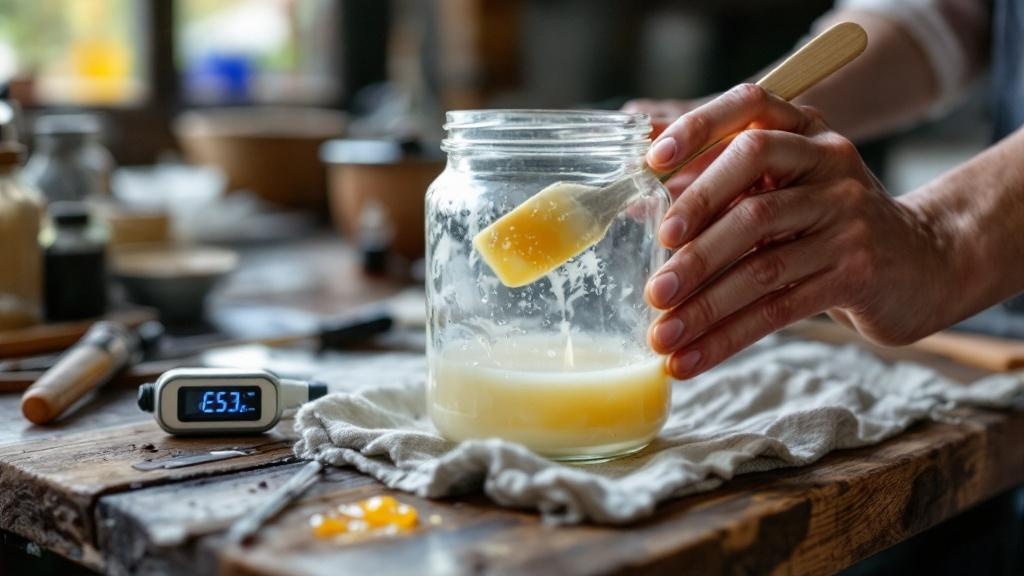
Cracked or uneven candle tops usually come down to cooling too quickly, pouring at the wrong temperature, or trying to fix the surface before the wax has set.
Wet spots and frosting appear after the pour looks finished, catching beginners off guard. Here is why the defect shows up and how to prevent it in UK kitchens.
Soot and oversized flames point to one thing: a wick that is too large for the jar. Here is the quick fix and how to stop it happening in the next batch.
Tunnelling happens when a candle burns down the middle instead of creating a full melt pool. It wastes wax and weakens scent throw. Here is the complete UK fix.
Most beginner candle problems come down to a short list of causes: the wrong wick, poor temperature control, or a burn that never established a full melt pool.
Most sinkholes and frosting come down to pour temperature, not the jar or fragrance. Here is the exact range that works for soy and paraffin in a UK kitchen.
This site uses cookies from Google Fonts to display typography. By continuing to browse you consent to their use.
See our Privacy Policy and Cookie Policy.