Prevent Wet Spots & Frosting in UK Container Candles (24hr Cure)
This post contains affiliate links. If you buy via these links we may earn a small commission at no extra cost to you.
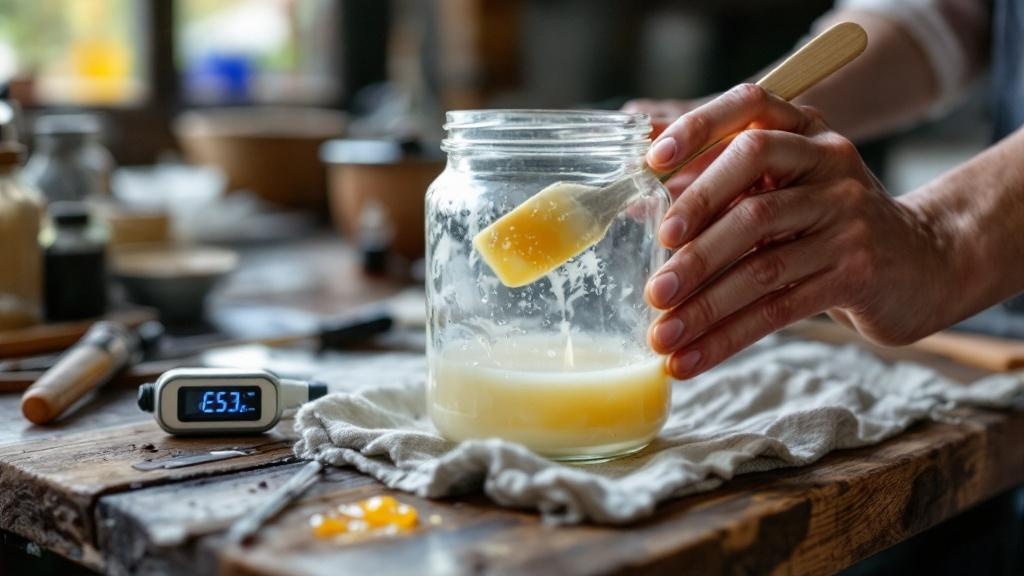
Wet spots and frosting usually appear after the pour looks finished, which is why they catch beginners off guard. They happen when the wax cools and shrinks away from the glass or the surface sets in a way that leaves a hazy finish. This guide explains why the defect often shows up later, how to rescue a batch, and what to change in your cooling routine to stop it happening again.
What Are Wet Spots and Frosting, Exactly?
Wet spots are those translucent, almost watery circles you see on the inside of the glass. Give the jar a gentle shake and they’ll move with the wax – a clear sign the wax hasn’t adhered properly. Frosting, on the other hand, is a milky haze that sits on the surface of the wax itself, usually on the top or the sides. Both are caused by a failure of adhesion between the wax and the container, triggered by a temperature differential as the wax cools faster than the glass.
Imagine the wax as a balloon that’s been inflated inside a rigid box. As the balloon cools, it shrinks. If the box (your jar) is colder than the balloon, the wax pulls away, leaving a gap – that’s your wet spot.
The “Day 2” Problem (Why it comes back)
Wet spots often make their debut 24 hours after pouring, when the wax finishes its final shrinkage. Most beginners stop checking at the 18‑hour mark, assuming the candle is set, and then discover a fresh patch the next morning. This isn’t a sign of a bad pour; it’s simply the wax completing its contraction cycle.
Goldenwax Soy Container 464, White, 1.5Kg (paid link), the go‑to soy blend for UK makers, is especially prone to this because its solidification point sits a few degrees higher than many other soy formulas. The wax pulls away from the glass just a touch later than you expect, creating new gaps that look exactly like the original wet spots. It’s a normal part of the cooling curve, not a catastrophe.
Check Goldenwax Soy Container 464, White, 1.5Kg price → (paid link)
Immediate Fixes (Can you save the candle?)
If you’ve already spotted wet spots, you still have a chance to rescue the batch.
- The Heat‑Gun Method – Grab a lightweight heat gun (a Bosch Heat Gun EasyHeat 500 (1600 W, in Carton Packaging) (paid link) is a solid, reasonably priced option). Hold it a few centimetres from the surface and sweep over the affected area for no more than 10 seconds. The wax will soften just enough to flow back into the gap. Press the glass gently with a clean wooden spatula to encourage contact, then let it cool undisturbed.
- The Wrap Method – While the candle is still warm (around 60 °C), wrap the jar loosely in a thick kitchen towel. The towel creates a mini‑greenhouse, trapping heat and allowing the wax to shrink more evenly against the glass. Leave it wrapped for 20‑30 minutes, then remove and let it sit untouched.
- Do‑This‑Now Checklist
- Check the wax temperature with a reliable thermometer.
- Lightly heat the surface if you’re using the gun – avoid melting the whole top layer.
- Press the glass gently; don’t tap hard.
- Allow the candle to finish cooling in a draft‑free spot.
See Bosch Heat Gun EasyHeat 500 (1600 W, in Carton Packaging) on Amazon → (paid link)
Warning: Over‑heating can cause sinkholes or new cracks. Keep the heat brief and the movement gentle.
Prevention Strategies (The 24‑Hour Rule)
The real cure is stopping wet spots before they appear. Here’s the step‑by‑step plan that can save countless jars.
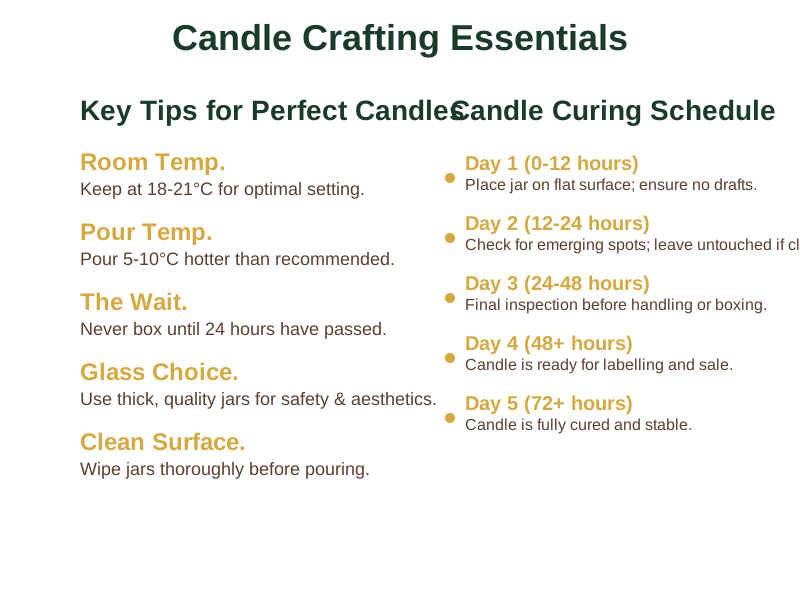
- Stable Cooling Environment – Keep the room at a consistent 18‑21 °C. A sudden cold draft (common in UK flats during the evenings) accelerates the temperature gap and encourages adhesion loss.
- Pouring Temperature – Aim to pour 5‑10 °C hotter than the wax’s recommended pour point. For Golden Wax 464, that means pouring at around 65 °C rather than the typical 58–60 °C. The extra heat gives the wax a longer “stick‑time” before it solidifies.
- The 24‑Hour Wait – Never box, label or wrap the candle until it has fully cooled for at least 24 hours (48 hours is even better for larger jars). This is the cornerstone of the “24‑Hour Rule”. The wax continues to shrink subtly for up to two days, and only after that does it reach its final shape.
- Wax Choice – Soy waxes like Golden 464 are beloved for their scent‑throw, but they are more prone to wet spots than a coconut‑rapeseed blend. If you’re especially sensitive to defects, consider a coconut/rapeseed blend – it shrinks less dramatically, though you may need to adjust fragrance load. You can read more about different options on our blog if you’re exploring other wax types.
- Cooling Log – Keep a simple notebook:
- Day 1 (0‑12 h): Jar placed on a flat, heat‑resistant surface. No drafts.
- Day 2 (12‑24 h): Check for any emerging spots; if none, leave untouched.
- Day 3 (24‑48 h): Final inspection before handling.
By following this routine, you’ll see a dramatic drop in wet spots. Many beginners report that shifting from “fix‑as‑you‑go” to a disciplined 24‑hour cooling schedule reduces defects noticeably – a change noticed just by keeping a log. You can learn more about our approach on our about page .
Now you know what to look for — Download the Free Checklist and make sure each batch gets the full 24‑hour treatment.
Container Selection & Wax Adhesion
Not all jars are created equal. The glass you choose can either help the wax cling or make it pull away faster.
- Glass Thickness – Thin, cheap jars (often the clear “Amazon” variety) lose heat quickly, widening the temperature differential. Thicker containers like thick-walled glass candle jars retain warmth longer, giving the wax more time to adhere.
- Glass Colour – Frosted or tinted glass can camouflage minor wet spots, but it won’t stop them forming. If you love a clean, clear look, invest in quality, thick glass.
- Clean Surface – Before you pour, wipe the jar with isopropyl alcohol or a mild detergent rinse. Any dust or oil creates a barrier that the wax can’t “grab”. Skipping this step because you are in a rush often results in a whole batch of candles with a ring of wet spots around the rim. Lesson learned: a quick wipe saves a lot of embarrassment.
Quick Answers
Can I fix wet spots after the candle has fully cooled?
Yes, you can, but honestly, it’s a lot trickier once the candle is fully cold. You’ll need to gently re-heat the surface with a heat gun and carefully press the wax back onto the glass. It’s much easier to catch them and fix them while the candle is still slightly warm.
Why do my soy candles have white spots on the top (frosting)?
This ‘frosting’ is typically caused by the wax cooling down too quickly, or sometimes by pouring it at too high a temperature. For Golden Wax 464, sticking to its recommended pour range (around 58–65°C) and using a reliable thermometer really helps keep that milky haze away.
Does wrapping the candle in a towel help?
Absolutely, it’s a clever trick. Wrapping the candle in a thick kitchen towel creates a mini-greenhouse, trapping heat around the jar. This allows the wax to shrink much more evenly against the glass, making it less likely to pull away. Just make sure to remove the towel once the candle feels solid.
Is Golden Wax 464 the best wax for avoiding wet spots?
Golden Wax 464 is super popular for beginners, mainly for its great scent throw, but the honest answer is it is quite prone to wet spots and frosting. If you really can’t stand any defects, a coconut-rapeseed blend might be a better bet – it shrinks less dramatically, though you’ll need to play around with your fragrance loads.
How long should I leave the candle to cool?
Ideally, you should leave your candle to cool for a full 24 hours – that’s the core of our ‘24-Hour Rule’. Most wet spots only show up after the first 18 hours as the wax completes its final shrinkage, so giving it the full day before you touch, handle, or package it is absolutely crucial.
Cooling Schedule Reference
| Day | Time Window | Action Required |
|---|---|---|
| Day 1 | 0-12 hours | Place jar on flat surface; ensure no drafts |
| Day 2 | 12-24 hours | Check for emerging spots; leave untouched if clear |
| Day 3 | 24-48 hours | Final inspection before handling or boxing |
| Day 4 | 48+ hours | Candle is ready for labelling and sale |
| Day 5 | 72+ hours | Candle is fully cured and stable |
Keep Learning
The key takeaway? Wet spots aren’t a sign you’ve ruined a batch; they’re a symptom of premature handling. By keeping the room temperature steady, pouring a little hotter, and respecting the full 24‑hour cooling window, you’ll see the defect disappear almost entirely. Remember to choose a sturdy, thick jar and always give the glass a quick clean before you pour.
If you’re ready to make every candle look as professional as the ones you buy, Download the Free Checklist – it walks you through each step of the 24‑hour process, from prep to final inspection. Got more questions? Feel free to get in touch – We are always happy to help a fellow candle‑maker sort out a tricky batch.
You’ve got this. Your next candle will be spotless, fragrant, and ready to wow.
Related Guides
For a complete overview, see our Troubleshooting Common Candle Making Problems UK .
References
- Which?
- Health and Safety Executive (HSE)
- Citizens Advice – Consumer Rights
- Cosmetics Europe – IFRA Standards
Note: General guidance only, verify details with a qualified professional or official source.