How to Fix a Tunnelling Candle: Causes & Solutions for UK Beginners

This post contains affiliate links. If you buy via these links we may earn a small commission at no extra cost to you.
Tunnelling happens when a candle only burns down the middle instead of creating a full melt pool across the surface. It wastes wax, weakens scent throw, and usually points to a short first burn, the wrong wick, or a poor setup in the room. This guide covers how to rescue a tunnelled candle and the checks that stop the problem happening again.
What is Candle Tunnelling? (And Why It Happens)
Candle tunnelling happens when the flame only melts the wax directly around the wick, leaving a ring of untouched wax around the edge. Visually, this looks like a “V” or a deep well forming in the centre of your candle. The main reason for this is what candle-makers call wax memory: the first time you light a candle, the wax “remembers” how far the melt pool expanded. If that initial melt pool doesn’t reach the edges of the container, the candle will stubbornly repeat that narrow burn pattern every time you light it, digging a deeper tunnel.
Think of it like muscle memory: a runner who always starts on the inside lane will keep favouring it unless they consciously train the other muscles. The wax behaves the same way. The first burn is critical; it tells the candle how far the melt pool should expand. Miss that, and the candle will stubbornly keep tunnelling.
Many beginners learn this the hard way: a birthday candle kit leaves a perfect tunnel after just a half‑hour burn. They assume the wax is faulty, but a quick read‑through of online guides reveals the “memory ring” explanation – and the fix is surprisingly simple.
Key takeaway: The first burn sets the wax memory; get that right and the candle will stay level for its whole life.
Why Does My Candle Tunnel in a UK Home?
Living in the UK, with its particular home environments, can definitely add a few extra variables that push a candle into tunnelling mode. Our homes often have conditions that encourage a narrower melt pool, even if you think you’re doing everything right.
Here are the main culprits:
- Central heating: Most UK homes run on central heating, which means dry, warm air that speeds up surface evaporation. This can cause the wick to burn hotter than the surrounding wax, encouraging a narrow melt pool rather than one that spreads evenly.
- Drafts: Those lovely period features, single‑glazed windows, open fireplaces, or even just a vent from the kitchen can create subtle drafts. These cool the candle’s surface, and the flame, always seeking the warmest path, will then try to burn straight down the centre.
- Over‑ventilation: Cracking a window to get rid of cooking smells or just to air out a room also chills the wax pool. Again, this nudges the flame inward, making it harder for the wax to melt all the way to the jar’s edge.
Lighting a candle near a radiator is a quick route to tunnelling; a draught-free corner away from the heat gives a far more even burn. The honest answer is that the silent killers of even burns are the very things we take for granted in a typical UK home. For more on general candle safety and placement, it’s always worth checking advice from organisations like the London Fire Brigade (though this link is for London, the advice is broadly applicable across the UK).
The “Salvage Protocol” – How to Fix a Tunnelling Candle
Below are three methods that let you rescue a candle that’s already dug a tunnel. Method 1 is the most reliable for soy wax, which most UK beginners use.
Method 1: The Re‑Dip (Best for Soy)
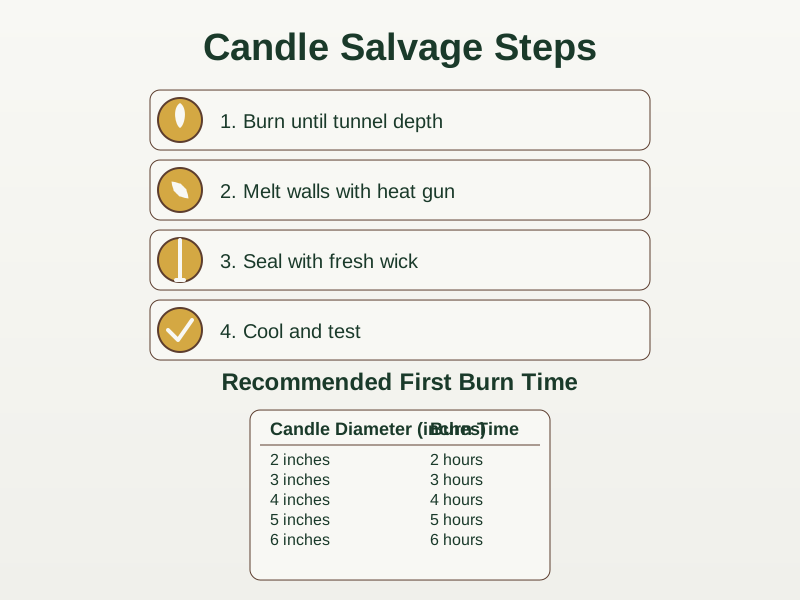
- Burn to the tunnel depth. Let the candle burn until the wax pool reaches the bottom of the tunnel – about 1 cm deep. This ensures the wax is hot enough to flow.
- Melt the tunnel walls. Use a heat gun on a low setting or a hair‑dryer held a few centimetres away. Move it around the tunnel’s perimeter until the walls soften and the wax becomes a smooth, level surface.
- Prepare a fresh wick. Trim a new wick to 5 mm, dip the tip into the melted wax, and press it firmly against the tunnel wall. The wax‑coated wick “seals” the edge, preventing future tunnels.
- Smooth the surface. Gently swirl the wick around the pool to even out any ridges. Let the candle cool undisturbed for at least an hour.
- Re‑light and test. The next burn should melt all the way to the jar’s edge, erasing the memory ring.
This works on a half‑finished soy candle with a 2 cm tunnel. After a few minutes with a hair‑dryer and a fresh wick, the wax level is flat again – and the candle burns perfectly for the rest of its life. If you’re looking for more general troubleshooting tips, our blog has plenty of articles on common candle making problems.
Method 2: The Wick Trim (Pre-emptive)
Even if you manage to rescue the candle, a correctly trimmed wick (5 mm) is essential for the next burn. Too short and the flame won’t reach the edges; too long and you’ll get smoking.
How to Prevent Tunnelling in the Future
Prevention is far easier than rescue. Stick to these golden‑rule checks each time you light a new candle.
- The 1‑Hour Rule: Let the candle burn for at least one hour per inch of diameter on the first light (e.g., a 3‑inch jar needs a 3‑hour burn). This creates a full melt pool and sets the wax memory correctly. This rule is the single most effective way to stop tunnelling.
- Choose the right wick size. Refer to our Wick Size guide – a wick that’s too small is the classic tunnel trigger, while an oversized wick leads to smoking. Getting this sorted from the start is proper important.
- Mind the environment. Keep candles away from drafts, heating vents, or open windows. A draught‑free spot lets the melt pool expand evenly. This is where a bit of “belt and braces” thinking really helps.
- Trim before every burn. A 5 mm trim removes excess wax that can cause the flame to climb too high. A proper Xiciki 3 Pcs Candle Wick Trimmer, Candle Snuffer and Wick Trimmer (Black) (paid link) makes this much easier than kitchen scissors.
- Use a stable surface. A wobbly table can cause the wax to pool unevenly, especially with taller jars.
View Xiciki 3 Pcs Candle Wick Trimmer, Candle Snuffer and Wick Trimmer (Black) on Amazon → (paid link)
Now you know what to look for — Download the Free Checklist and make sure every candle gets the perfect start.
Common Questions
Can I fix a candle that has tunneled deeply?
Yes, you can fix a deeply tunnelled candle, but it definitely takes patience. Your best bet is to melt the tunnel walls down to the liquid pool and then seal them with a re‑dipped wick using Method 1. However, if the tunnel is deeper than the existing wax pool and you can’t get the walls to melt evenly, the candle may be unsalvageable, and you might be better off starting fresh.
Why does my candle keep going out on its own?
Usually, if your candle keeps extinguishing itself, it’s down to one of two things: either the wick is too small for the melt pool it’s trying to create, or a draft is cooling the flame too much. Make sure to trim the wick to 5 mm and move the candle away from any vents or open windows to give it a fighting chance.
Is tunnelling dangerous?
Tunnelling itself isn’t usually a direct fire hazard, but it is wasteful of your wax and fragrance. Over time, a consistently narrow flame can cause the wick to dip into the wax and get “drowned”, or it can lead to the jar overheating if you’re using an oversized wick in a desperate attempt to fix the tunnel. It’s best to sort it out to ensure a safe and efficient burn.
Does the type of wax matter?
Yes, the type of wax can definitely influence tunnelling. Soy wax is generally more prone to tunnelling if that crucial first burn is too short, simply because it solidifies quite quickly. Paraffin wax tends to be a bit more forgiving, but it can still crack if it cools too fast so it’s worth rescuing a tunnel quickly using the Re-Dip method.
How long should the first burn be?
The golden rule for the first burn is one hour per inch of the candle’s diameter. This ensures the melt pool has enough time to reach the jar’s edge, effectively setting the wax memory for a level, even burn for the rest of the candle’s life.
Candle Burn Time Reference
| Candle Diameter (inches) | Recommended First Burn Time |
|---|---|
| 2 inches | 2 hours |
| 3 inches | 3 hours |
| 4 inches | 4 hours |
| 5 inches | 5 hours |
| 6 inches | 6 hours |
What to Do Next
Tunnelling is a common learning curve when you’re starting out – it’s certainly not a sign you’re “bad” at candle making. The key take‑aways are simple: give that first burn enough time, pick the right wick (our Wick Size guide can help with that), and always keep the candle away from drafts. If you’ve already got a tunnel, the Re‑Dip method will usually save your soy candles, and the Wick Trim method keeps your wick at the right height for future burns.
Don’t let a little tunnel ruin your hobby. With the right fix and a few preventative habits, every candle you make can burn beautifully from the first flicker to the last drop. Download the Free Candle Burning Checklist now and ensure you never waste wax again. Happy burning!
Related Guides
For a complete overview, see our Troubleshooting Common Candle Making Problems UK .
Further Reading
Note: General guidance only, verify details with a qualified professional or official source.