How to Fix Cracked Candle Tops (The 'Second Pour' Trick)
This post contains affiliate links. If you buy via these links we may earn a small commission at no extra cost to you.
Cracked or uneven candle tops usually come down to cooling too quickly, pouring at the wrong temperature, or trying to fix the surface before the wax has settled properly. The good news is that most of these flaws are cosmetic and can be corrected at home. This guide covers three practical fixes and the checks that help stop the problem repeating on your next pour.
Why Do Candle Tops Crack?
Cracking occurs when the outer wax solidifies faster than the inner wax, creating tension that splits the surface. It’s almost always caused by the wax cooling too fast on the outside while the inside stays hot—a classic case of temperature shock. When that outer layer solidifies, it pulls inward, leaving a visible fissure. If you also add an over-pour while the wax is still warm, you’re basically setting a trap for that shrinkage to happen. Keeping the pour temperature steady and avoiding over-pouring while the jar is still warm are key to preventing this temperature shock.
A quick “don’t do this” tip: never pour into a jar that’s still warm from the previous batch. Even a few degrees can make the difference between a smooth dome and a cracked mess. In the UK, our homes can swing from a cosy 18 °C living room to a chilly 12 °C hallway, especially in older terraced houses. Those temperature swings speed up the cooling of the wax’s surface, increasing the shock factor.
If you want to avoid the crack altogether, aim for a pour temperature of around 55–65 °C for a quality UK soy wax. Staying in that range gives the wax enough fluidity to fill the container without solidifying too quickly, which is why it’s a reliable choice for smooth tops.
Method 1 – The “Second Pour” (No Tools Needed)
The second‑pour technique is the most beginner‑friendly fix and costs you nothing more than a handful of extra grams of wax. Many beginners have saved a batch this way more times than they can count. Trying it with a half‑lit candle teaches the hard way that the wax needs to be fully solid before you start. It is all part of the learning curve.
- Re‑melt a small amount of the same wax – about 50 g is plenty. Use your regular pouring pot; you don’t need a separate kettle.
- Heat it to 55–65 °C – this is hot enough to flow into the crack but not so hot that it burns the surrounding wax. A digital thermometer makes this spot‑on.
- Pour slowly over the centre of the crack – aim for a gentle stream that fills the void without splashing. If the crack is wide, a thin ribbon of wax works best.
- Let it cool naturally – resist the urge to fan it or blow on it; that just re‑introduces temperature shock.
Why it works: The fresh wax expands just enough to fill the shrinkage gap, and as it cools it bonds with the original layer, erasing the line.
Tip: If the new pour leaves a faint line, lightly smooth it with a disposable wooden stirrer before it sets. The line will blend in once everything hardens.
Now you know what to look for — Download the Free Checklist so your next pour hits the right temperature the first time.
Method 2 – The Heat Gun Fix (For Grainy Textures)
A heat gun can give a flawless finish, but many UK makers report a grainy surface if they misuse it. Many beginners fall into that trap, ending up with a candle that looked like it’d been sanded with a cheese grater. The fix is all about movement and timing.
- Set the gun to a low heat setting – most entry‑level models (the Bosch Heat Gun EasyHeat 500 (1600 W, in Carton Packaging) (paid link) is a solid, not‑cheap‑but‑not‑a‑con‑either choice) have a “low” dial that’s perfect for wax.
- Keep the gun moving constantly – glide it in a slow circular motion a few centimetres above the surface. Hovering in one spot is the fastest way to melt unevenly and create a grainy texture.
- Stop as soon as the surface looks glossy and smooth – you’ll see the wax melt into a shiny film; that’s your cue to turn the gun off.
- Let it cool slowly – place the candle on a heat‑resistant mat and avoid drafts. A slow cool prevents new cracks from forming.
View Bosch Heat Gun EasyHeat 500 (1600 W, in Carton Packaging) on Amazon → (paid link)
Warning: Overheating can scorch the fragrance and make the wax brittle. If you notice a faint smell of burnt sugar, you’ve gone too far.
This method is great for fixing a grainy top after a second pour, or for giving a fresh finish to a candle that’s already set but looks uneven.
Method 3 – The “Sacrificial Pour” (For Severe Cracking)
When a crack is deep enough to show through the wax, a simple second pour might not hide it. That’s where the sacrificial pour comes in – you essentially pour a whole new layer on top of the old candle.
- Make sure the original candle is completely solid – give it at least an hour after the first pour, longer if your room is cool.
- Re‑melt your wax – you can use the same batch or a fresh batch; just keep the temperature at 55–65 °C.
- Pour slightly above the rim of the old candle – aim for a level that sits a centimetre or two higher than the original top. The new wax will flow over the crack and level itself.
- Allow it to cool undisturbed – the new layer will create a smooth, even surface that masks the underlying fissure.
Note: This is purely a cosmetic fix. The scent throw may be marginally weaker because the fragrance is now split between two layers, but for a gift or a one‑off batch it’s more than enough.
Troubleshooting Checklist for Beginners
Use this quick list before every pour to keep cracks at bay:
- Is the wax temperature within the 55–65 °C range for your blend? (a digital thermometer helps here)
- Is the room temperature stable, ideally between 18 °C and 22 °C? Avoid draughty kitchens.
- Have you let the candle cool completely before moving the jar? A sudden jolt can cause shrinkage.
- Is the wick size matched to the container? Too large a wick can overheat the centre, leading to uneven cooling.
Pro tip: A belt‑and‑braces approach is to record your pour temperature and room temperature each time. After a few batches you’ll spot the sweet spot for your specific set‑up.
Quick Answers
Can I use a hair dryer instead of a heat gun?
Yes, but be careful. Hair dryers push a lot of airflow, which can cool the wax too fast and cause another crack. If you go this route, keep it on the lowest setting and keep the dryer moving constantly.
Why does my candle top look grainy after using a heat gun?
That usually happens when you hold the gun in one spot for too long. The wax melts unevenly and then solidifies with a rough texture. Keep the gun moving and stop as soon as the surface turns glossy.
What is the best wax for smooth tops in the UK?
A good-quality soy wax with a lower melting point — such as Golden Wax 464 or KeraSoy Container — reduces temperature shock, meaning fewer cracks and a smoother finish, especially in the variable temperatures of British homes.
Will the second pour ruin the scent throw?
No, as long as you use the same wax and fragrance blend you started with. The scent molecules stay evenly distributed, so the candle smells just as strong.
How do I know if my wax is too hot before pouring?
If you see bubbling or a faint smoke, it’s too hot. If the wax is so thick it won’t flow off a spoon, it’s too cold. Aim for that middle sweet spot – around 55–65 °C for most soy blends.
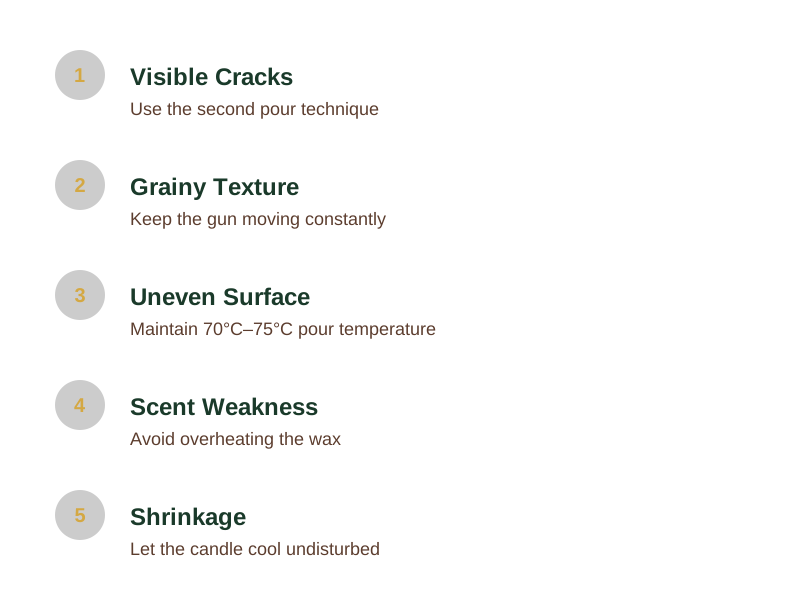
Candle Top Troubleshooting Checklist
| Issue | Likely Cause | Quick Fix |
|---|---|---|
| Visible Cracks | Rapid cooling or over-pouring | Use the second pour technique |
| Grainy Texture | Heat gun held in one spot | Keep the gun moving constantly |
| Uneven Surface | Temperature shock | Maintain 55–65 °C pour temperature |
| Scent Weakness | Fragrance burnt off | Avoid overheating the wax |
| Shrinkage | Wax cooling too fast | Let the candle cool undisturbed |
What to Do Now
Cracked or uneven tops are a nuisance, but they’re far from fatal. By understanding the temperature shock that causes them and using the second‑pour, heat‑gun, or sacrificial‑pour methods, you can rescue a batch that looks like a disaster and turn it into a presentable candle.
Remember the checklist: temperature, room conditions, cooling time, and wick size. Keep a thermometer handy, and treat each pour as a little experiment – the more data you collect, the fewer cracks you’ll see.
Ready to pour your next batch with confidence? Grab our free Candle Making Checklist – it walks you through temperature checks, wick selection, and the tiny details that keep your tops smooth every time. If you want to dive deeper into all things candle making, take a look at our blog for more tips and tricks.
You’ve got this. Happy pouring!
Related Guides
For a complete overview, see our Troubleshooting Common Candle Making Problems UK .
Further Reading
Note: General guidance only, verify details with a qualified professional or official source.