Soy vs Paraffin vs Coconut Wax: Which Works for UK Beginners?
This post contains affiliate links. If you buy via these links we may earn a small commission at no extra cost to you.
Choosing a candle wax is mostly a trade-off between ease of use, scent throw, finish and cost. For a beginner, the wrong pick usually shows up as weak fragrance, awkward pouring or a result that looks rougher than expected. This guide compares the main wax types UK makers are likely to buy so you can match the wax to the kind of candle you actually want to make.
Which Candle Wax is Best for Beginners in the UK?
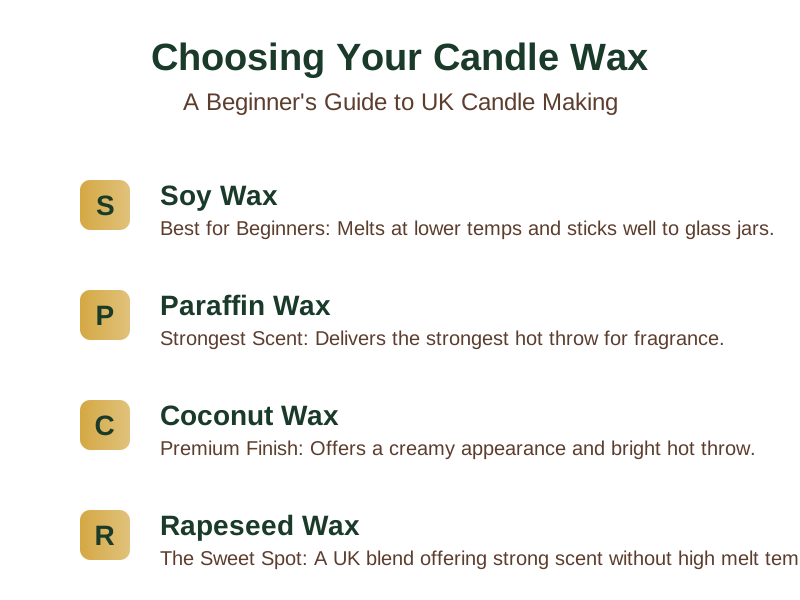
For a beginner, the most important criteria when choosing a candle wax are ease of use and scent throw. Soy wax scores highest on ease of use because it melts at a lower temperature and adheres well to glass containers, reducing the risk of “pull‑away” rings. Paraffin wax, while requiring a higher melt temperature, delivers the strongest hot scent throw, making it the go‑to for fragrance‑intensive projects. Coconut wax offers a premium, creamy appearance and a strong hot throw, but its softer nature can be challenging to work with without a hardener. Weighing these factors against your budget and skill level will point you toward the wax that best matches your first-time goals.
Why this matters: If you’re after a candle that’s easy to pour and won’t leave a ring around the jar, soy is the “starter” choice. Want the strongest fragrance punch for a scented gift? Paraffin wins. Craving a luxe, creamy finish and don’t mind a slightly higher price? Coconut fits the bill.
Many beginners learn the hard way: a cheap bulk soy pack, melted at about 46 °C – too low – ends up with a lot of sinkholes and weak scent. Raising the temperature to the 52 °C sweet spot usually solves it, but the wasted wax is a painful lesson.
The “Hidden” Contender: Why You Should Consider Rapeseed
Rapeseed wax is a vegetable wax, and UK suppliers also sell it in blends with coconut wax for container candles. Check the exact blend on the pack: a rapeseed-and-coconut product is different from a soy-and-paraffin product.
- Scent throw: Test your fragrance in the particular blend you buy; the wax name alone cannot promise a stronger result than soy.
- Ease of use: Follow the blend’s own melting and pouring guidance and test it in your chosen jar.
- Cost: Compare the current price per kilogram for the actual pack size before buying.
A cheap soy blend that keeps “splitting” in the jar is a common reason to switch, and a reputable UK rapeseed wax from a supplier like Candle Shack is the usual fix.
Pro Tip: A rapeseed-and-coconut container blend is a useful third option to test alongside soy and paraffin if you want to compare finishes and scent throw in the same jar.
The “Don’t Buy” List: Beeswax
Beeswax looks gorgeous, but it’s a bit of a faff for first‑timers.
- Price: Around £20‑£25 per kilogram – a steep start when you’re still learning.
- Scent: Naturally subtle; adding fragrance oils is tricky and often results in muted aromas.
- Workability: Requires higher melt temperatures (around 64 °C) and can be stubborn to pour into narrow containers.
Save beeswax for when you’ve mastered the basics and want to experiment with natural, honey‑scented candles. For now, stick to soy, rapeseed, paraffin or coconut.
The “Facebook Secret”: Blending Waxes
A popular thread in a UK Candle Makers Facebook group mentions a soy-paraffin blend. The idea is simple: combine soy’s easy-pouring nature with paraffin’s superior scent throw and adhesion.
- Why it works: The paraffin fraction reduces the “pull‑away” ring that pure soy can leave on glass, while the soy keeps the melt temperature lower.
- Risk: You need to control the melt temperature precisely (around 57 °C) and stir thoroughly to avoid separation. If the blend isn’t uniform, you’ll end up with uneven burning and possible tunnelling.
Beginner Warning: Don’t try this blend until you’ve successfully poured at least three batches of a single wax type. Mastery of temperature control is belt and braces for a successful hybrid. For general guidance on product safety, the GOV.UK website offers useful information, even if it’s aimed at businesses, it highlights the importance of testing.
Practical Decision Matrix: Which Wax Should You Buy?
Below is the quick‑pick guide that matches your priorities to the right wax. Use it as a checklist before you hit “add to basket”.
Choose Soy if…
- You want the cheapest, most beginner‑friendly wax.
- Eco‑concerns matter to you, and you’re happy with a modest scent throw.
- You’ll be making container candles in standard glass jars.
- See also: Candle Making Starter Kit
Choose Paraffin if…
- Maximum fragrance punch is non‑negotiable (think strong holiday scents).
- You don’t mind a slightly higher melt temperature and a bit of clean‑up.
- You’re comfortable with the environmental trade‑off for performance.
- See also: Candle Making Supplies Guide
Choose Coconut if…
- You have a higher budget and want a premium, creamy finish.
- You’re making larger container candles where a smooth surface matters.
- You’re okay with adding a hardener to keep the wax from staying too soft.
Choose Rapeseed if…
- You want strong scent without the hassle of a high‑temperature melt.
- You’re looking for a UK‑sourced, locally produced wax that’s easy on the wallet.
- You plan to make a mix of scented and unscented candles and need consistency.
If you’ve reached this point and feel ready to pick a wax, now you know what to look for — Download the Free Checklist . It walks you through the exact specs, suppliers and safety steps you’ll need before you melt your first pot.
Common Questions
Which wax gives the best scent throw?
Paraffin generally delivers the strongest hot scent throw, followed closely by coconut and rapeseed. Soy can be a bit shy on fragrance unless you use a high‑quality oil and keep the melt temperature spot on.
Is Soy wax hard to work with?
Soy is the most beginner‑friendly wax in terms of safety and eco‑friendliness, but it can develop sinkholes or poor adhesion if the temperature isn’t managed correctly. A steady 52 °C melt usually does the trick.
Can I mix different types of wax?
You can, but it’s really an intermediate‑maker trick. Mixing introduces extra variables – temperature, cooling rate, fragrance compatibility – so stick to one wax type until you’ve nailed the basics.
Where can I buy these waxes in the UK?
Most major candle suppliers – Candle Shack, Supplies For Candles, and even larger craft chains – stock soy, paraffin and coconut. Rapeseed is also widely available from UK-based vendors; just check the product description for the blend details if you want that middle ground. For reputable suppliers, it’s always worth checking reviews on platforms like Trustpilot or looking for UK-specific industry associations.
Is a container wax suitable for wax melts?
Goldenwax Soy Container 464, White, 1.5Kg (paid link) is sold as a soy container wax. Check the supplier’s instructions before using it for wax melts; a product formulated for containers may not release cleanly from a mould.
Buy Goldenwax Soy Container 464, White, 1.5Kg on Amazon → (paid link)
Wax Performance Comparison
| Wax Type | Burn Time (hrs/200g) | Scent Throw (Hot) | Ease of Use | Typical Melt Temp |
|---|---|---|---|---|
| Soy | 30–35 | Good | Easy — low melt, adheres to glass | 49–54 °C |
| Paraffin | 35–40 | Excellent | Medium — higher melt, can pull away | 55–65 °C |
| Coconut | 25–30 | Very good | Harder — very soft, may need hardener | 45–52 °C |
| Rapeseed blend | 30–35 | Good–Very good | Easy — similar to soy, UK-sourced | 49–54 °C |
| Beeswax | 40–50 | Subtle | Difficult — high melt, poor fragrance binding | ~63–65 °C |
Your Next Step
You’ve got the lay of the land: soy for ease, paraffin for power, coconut for luxury, and rapeseed for the happy medium. The key is to match the wax to the result you actually want, not the marketing hype you see on Instagram.
Remember, the first batch is all about learning the temperature curve and getting a clean pour. Once you’ve got that down, you can experiment with blends or upscale to larger containers. If you’re curious about other topics, do check out our blog for more tips and tricks.
Ready to pick your wax and start crafting? Grab our free Candle Making Checklist – it’s the perfect companion to make sure you haven’t missed any essential step, from choosing the right wax to testing the final burn. You can learn more about our approach to candle making on the About Us page.
Happy pouring, and may your first candle burn bright and fragrant!
Related Guides
For a complete overview, see our Mastering Candle Making Supplies: Wax, Wicks & Fragrance .
Further Reading
Note: General guidance only, verify details with a qualified professional or official source.