Candle Pouring Temperature UK: Fix Sinkholes & Frosting First Time
This post contains affiliate links. If you buy via these links we may earn a small commission at no extra cost to you.
Most frosting, sinkholes and uneven finishes come down to pour temperature rather than the jar or fragrance. Get that temperature wrong and even a decent wax can set with surface flaws or poor scent throw. This guide focuses on the part that matters: how pouring temperature affects the finish, how to avoid the usual Fahrenheit-versus-Celsius confusion, and where temperature mistakes create defects.
(See our full starter guide: UK Candle Making for Beginners .)
Why Does UK Candle Making Get Confused with Fahrenheit and Celsius?
It’s a common headache: candle making temperatures are often quoted in Fahrenheit, especially in US tutorials, yet most UK suppliers list everything in Celsius. This mismatch is a bit of a faff that often leads to under- or over-pouring, causing all sorts of issues with your candles.
The rule of thumb: Always convert the target temperature to the unit your thermometer displays, then set the pot to that exact number. If your thermometer reads Fahrenheit, use the °F column; if it reads Celsius, stick to the °C column. A quick Google conversion can save you a whole batch.
Why the confusion? Most online tutorials – especially US‑based YouTube videos – quote Fahrenheit because it’s the default in the States. UK manufacturers, however, ship wax with a Celsius data sheet (EcoSoya Technical Data Sheet). Mixing the two means you could be pouring at 70 °C when the wax actually needs 55 °C – a recipe for sinkholes.
Soy Wax: The Smooth Finish Guide
Soy is the go‑to for beginners because it’s low‑smoke, renewable and forgiving – but only if you respect its temperature window.
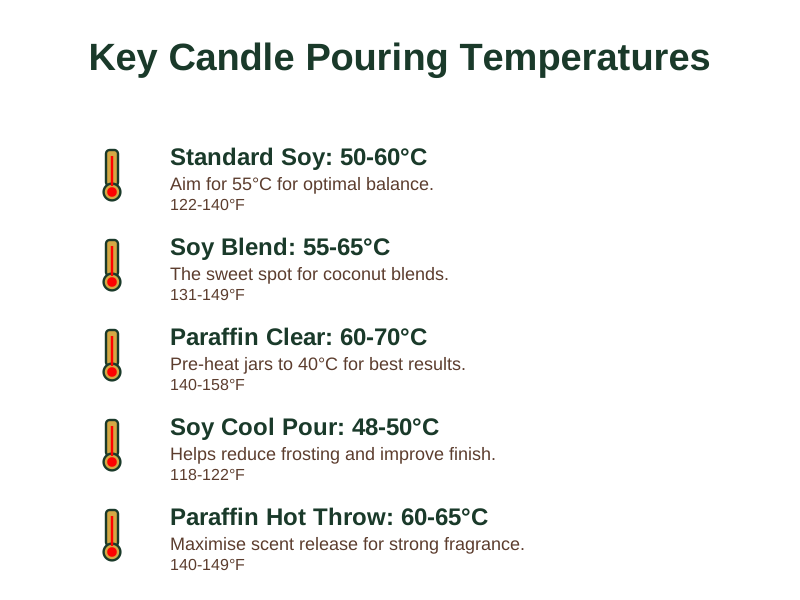
- Standard soy (EcoSoya, C3): Aim for 50‑60 °C (122‑140 °F).
- The “Frost” myth: White speckles aren’t a defect; they’re natural crystallisation of the fatty acids. Pouring at the cooler end of the range (around 50 °C) reduces the chance of visible frost. If you love a pristine finish, let the wax sit a minute after reaching 55 °C, then give it a gentle stir before pouring.
- Sinkhole fix: Too hot a pour burns the fragrance oil, causing the wax to contract as it cools – the centre pulls away, leaving a dip. Conversely, pouring too cold makes the wax too thick to fill the jar evenly, also creating a sinkhole. The sweet spot is 55 °C for most soy blends.
- Hot throw vs. cold throw: Pour at 60 °C for a stronger scent release (hot throw) if you’re making a room‑filling candle. Drop to 50 °C for a subtle, long‑lasting scent (cold throw).
Got this wrong for ages? Many beginners pour EcoSoya at 70°C because they think “hot = better”. The fragrance vanishes, and the candle looks like a frosted cake. Lesson learned – temperature is the bridge between scent and appearance.
For more on choosing the right wax, see our Best Candle Wax for Beginners .
Paraffin Wax: High‑Performance Guide
Paraffin is popular for its quick set‑up and brilliant shine, but it’s less forgiving than soy.
- Typical pour: 60‑70 °C (140‑158 °F).
- Why it matters: Paraffin cools faster than soy. If it drops below 55 °C in the pot, it will seize – the wax solidifies in clumps and you end up with a lumpy pour. Keep the pot temperature steady with a stainless‑steel pot (it retains heat better than aluminium).
- Common pitfall – cracking: Pouring at the top of the range (70 °C) into a cold jar can cause the outer layer to contract rapidly, cracking the surface. Pre‑heat your jars to about 40 °C (104 °F) to avoid the shock.
What Temperature Errors Cause Common Candle Defects?
Here’s the quick‑reference list that tells you which defect points to which temperature error, helping you diagnose and fix issues like sinkholes, frosting, cracking, and cloudy wax:
- Sinkhole: Pour too hot (burnt fragrance) or too cold (wax too thick).
- Frosting: Cool too fast or use a pure soy blend. Pour cooler (≈50 °C) and keep the room warm.
- Cracking: Pour too hot into a cold container, or a sudden drop in room temperature. Pre‑heat jars.
- Cloudy wax: Moisture in the room or pouring above 65 °C with fragrance. Keep the workspace dry and stick to the recommended range.
If your candle has a sinkhole, the most likely cause is an incorrect pour temperature. Pouring at a temperature above the recommended range burns off the fragrance oil, causing the wax to contract as it cools and leaving a dip in the centre. Conversely, pouring below the ideal range makes the wax too viscous to fill the jar evenly, which can also create a sinkhole. The solution is simple: heat your soy wax to around 55 °C (131 °F) and your paraffin to 65 °C (149 °F), then pour into pre‑warmed jars. This temperature window ensures the wax remains fluid enough to fill the container while preserving the fragrance, eliminating sinkholes in most cases.
If you’re battling a frosted finish, try the “cool‑pour” trick: let the wax drop to 48‑50 °C before you pour, then cover the candle with a cardboard dome for the first hour to slow cooling.
For a step‑by‑step fix for sinkholes, check out our Candle Making Troubleshooting Guide .
Tools You Need (Beyond the Thermometer)
Beyond your wax and wicks, having the right tools makes all the difference when it comes to hitting those perfect pouring temperatures and avoiding common pitfalls.
- Digital probe thermometer: A probe with a pot clip helps you keep track of the wax temperature. The BOMATA 20cm Long Probe Candy Thermometer with Pot Clip, Rotating Display, High Accuracy Instant Read Digital Thermometer for Candles, Liquids, Cooking, Grilling and More… (paid link) is listed for candles and liquids as well as cooking; check the reading is stable before pouring.
- Pouring pot material: Stainless steel holds heat longer than aluminium, giving you a more stable temperature as you work. If you’re on a budget, a double‑boiler setup with a thick‑walled glass bowl works, but watch the temperature drop.
- Pouring pitcher: A dedicated BOYUJK Candle Wax Melting Pot, Wax Melter for Candle Making, 900ML High Volume Dripless Pouring Pitcher Candle Making Pot with Heat-Resistant Handle for Candle Making Crafts in Home Kitchen (900 ml) (paid link) makes controlled pouring far easier than ladling from a saucepan. The 900 ml size is plenty for a first batch.
- Room temperature: A chilly loft will sap heat from the wax faster than a cosy kitchen. Aim for a workspace around 20‑22 °C (68‑72 °F). If it’s colder, use a portable heater or a warm blanket over the pot (belt and braces approach).
Now you know what to look for – Download the Free Candle Pouring Temperature Checklist and keep your temps spot on every pour.
Quick Answers
Why is my candle frosting?
Frosting, those white speckles you see, is actually just natural crystallisation in soy wax – it’s not a mistake! To keep it to a minimum, try pouring at the cooler end of the recommended range (around 50 °C or 122 °F) and make sure your workspace is warm and free from draughts.
What is the best temperature to pour soy wax?
For soy wax, the ideal pouring temperature window is generally 50‑60 °C (122‑140 °F). Aim for 55°C for a good balance of scent throw and a smooth finish. If you’re battling frosting, dropping your pour temperature closer to 50 °C can really help.
Can I pour paraffin wax at the same temperature as soy?
No, you really shouldn’t. Paraffin wax needs a significantly higher pouring temperature range, typically 60‑70 °C (140‑158 °F). It cools much faster than soy and is far less forgiving, so sticking to its specific range is key to avoiding issues like seizing or cracking.
Does pouring temperature affect scent throw?
Yes, absolutely! Pouring temperature has a massive impact on how well your candle smells. If you pour too hot, you risk burning off those delicate fragrance oils, which means less scent when the candle burns. Pouring too cold, on the other hand, can stop the fragrance from properly binding with the wax, again leading to a weak throw. Always stick to the recommended temperature range for your specific wax to get the best results.
Do I need to heat the jar?
Yes, please do! This is a simple step that makes a real difference. Pouring hot wax into a cold jar can shock the wax, leading to rapid contraction and common defects like sinkholes or frosting. A quick pre-warm to around 40 °C (104 °F) before pouring will help the wax cool more evenly.
Candle Pouring Temperature Reference
| Wax Type | Recommended Pour (°C) | Recommended Pour (°F) | Notes |
|---|---|---|---|
| Standard Soy (EcoSoya, C3) | 50‑60 | 122‑140 | Aim for 55 °C for balance |
| Soy Blend (EcoSoya + Coconut) | 55‑65 | 131‑149 | Sweet spot for blends |
| Paraffin (Clear) | 60‑70 | 140‑158 | Pre-heat jars to 40 °C |
| Soy (Cool Pour) | 48‑50 | 118‑122 | Helps reduce frosting |
| Paraffin (Hot Throw) | 60‑65 | 140‑149 | Stronger scent release |
| Soy (Cold Throw) | 50‑55 | 122‑131 | Subtle, long-lasting scent |
What to Do Next
Temperature control is the bridge between a hobbyist’s first batch and a polished, gift‑ready candle. Remember: each wax has its sweet spot, your thermometer is your best friend, and a warm workspace makes all the difference.
If you’ve taken notes and feel ready to nail your next pour, download our free Candle Pouring Temperature Checklist – it’s a simple cheat‑sheet that keeps your temps spot on, every time.
And if you need a fresh start with all the right tools, our Candle Making Starter Kit guide has everything you need to keep the process smooth and the results stunning.
Happy pouring, and may your candles be flawless and fragrant!
Related Guides
For a complete overview, see our Mastering Candle Making Supplies: Wax, Wicks & Fragrance .
Further Reading
Note: General guidance only, verify details with a qualified professional or official source.